Burlingame Eichlers / Buying
The contingency period, spent properly
Two items decide the money. Book them on day one.
The radiant system in the slab and the roof. Everything else on this page is worth doing, and neither of those two will wait — radiant specialists run two to four weeks out, and the test needs a 24-hour cool-down before it even starts. Order them the day you are in contract, not in week two.
Built 1964–65, every Eichler here has copper radiant tubing, not the steel of the early tracts. Copper is repairable leak by leak. Corroded steel often is not. Why that matters →
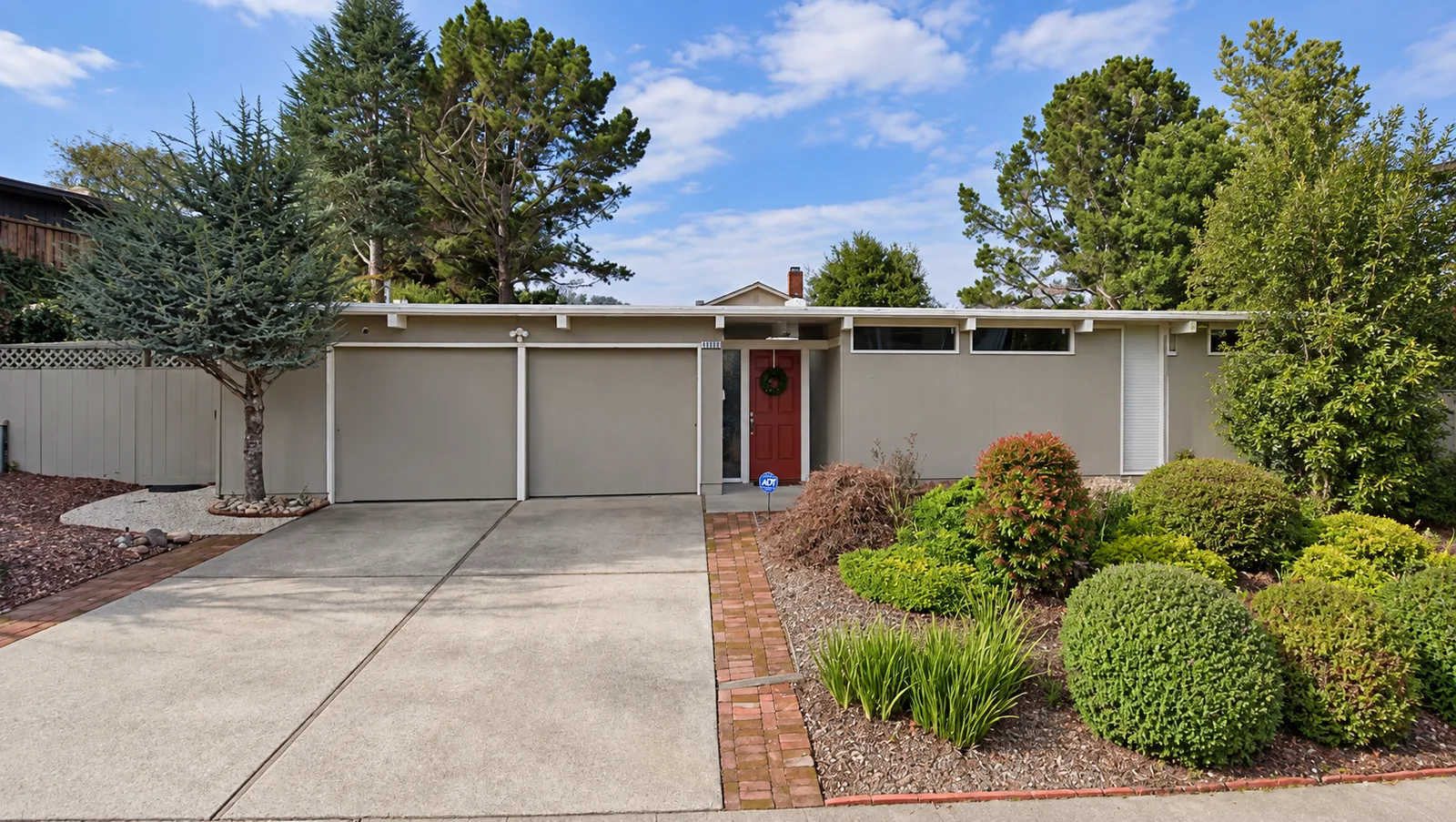
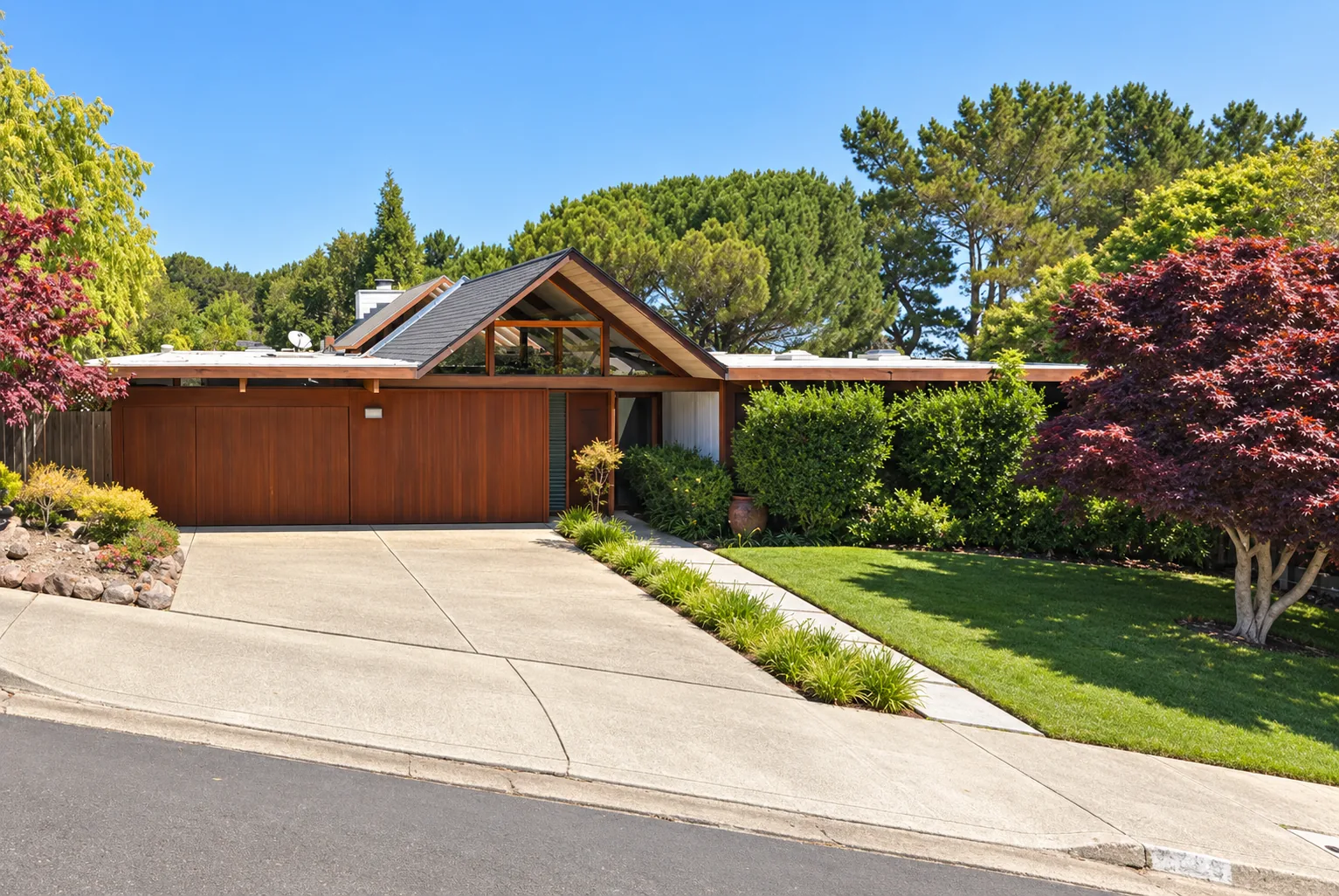
The list.
| # | Check | What good looks like |
|---|---|---|
| 1 | Radiant pressure test book first |
Hydrostatic, water only, after a 24-hour cool-down, on a separate gauge with 1 PSI graduations, repeated. A pass means no leak today — not a certified system. The protocol → |
| 2 | Roof age and paperwork | A dated permit and invoice. Bay Area Eichler roofs are reported to run 12–15 years. At fourteen you are buying a roof. Roofs → |
| 3 | Insurance quote | An actual quote, in writing, during contingency. Flat roofs are restricted by several large California carriers. Why → |
| 4 | Slab and drainage | On a graded hillside lot: where water goes, retaining walls and their age, cut versus fill, crack pattern, efflorescence at the perimeter. The hillside → |
| 5 | Electrical service | What the panel is, whether the service has been upgraded, and what happens if you want to add mini-splits, an EV charger or an induction range. A 1964 service was not sized for any of them. |
| 6 | Permit history | Pull it from the City of Burlingame. Unpermitted additions on these houses are common and they are a valuation problem, an insurance problem and a resale problem in that order. |
| 7 | How much original house is left | Ceilings, glass walls, thresholds, entry court. This is the largest single factor in what the house is worth. Why → |
| 8 | The thresholds | Floor flush to the terrace at the sliders. A step usually means a floor overlay, which usually means somebody has already dealt with the radiant system in a way worth asking about. |
| 9 | Glazing | Which panes are original, which are replaced, and whether the replacements kept the sightline and the divisions. The glass → |
| 10 | Sewer lateral | Camera it. On a slab house with no crawl space, a lateral problem is not a weekend job, and the line runs downhill under a graded lot. |
| 11 | Trees and roots | Mature planting on a sixty-year-old hillside lot, next to a flat roof that needs its drains clear and a slab that does not like moving. Worth an arborist if anything is close. |
The problem specific to this tract
There may be no comparable sale. Plan for the appraisal to be hard.
Mills Estate is about a hundred houses. At that size it turns over a handful a year across eight streets, so the chance that a genuinely comparable Eichler sold near you in the last six months is low. An appraiser reaching for a comparable in this tract is often reaching for the wrong roof, the wrong condition or the wrong year — or stepping outside the Eichler cohort entirely and pricing a conventional 1950s hillside house.
That is not a hypothetical risk. It is the normal condition here, and it is the single most likely thing to go wrong between acceptance and close.
What actually helps: give the appraiser the material rather than hoping. Peninsula Eichler sales of the same era and size band, adjusted for city and schools. The specific features that carry value in this architecture and would not be obvious — a folded-plate roof, a documented atrium, an intact original plan. Documentation on the roof and the radiant system.
An appraiser handed nothing will value the house as a 2,200 square foot Burlingame house from 1964. That is not wrong, exactly. It is just not what you are buying.
What to negotiate on, and what not to
Two of these are real money. The rest are noise.
Worth negotiating. An undocumented radiant system — not because it will fail, but because nobody can price the risk, and unpriced risk belongs with whoever is better placed to resolve it. A roof at the end of its cycle, at replacement cost rather than at a repair credit. An unpermitted addition, because that one follows you to your own resale.
Not worth much. Cosmetic condition, which in this architecture is cheap to change and does not move the ceiling on value. Single glazing, which is original and which a buyer who wants an Eichler already expects. Dated kitchens and bathrooms — in a house where the plan is the asset, those are the easy part.
A house with an ugly kitchen and a documented roof and slab is a better buy than a staged one with neither, and it usually trades for less.
Before you write the offer
Three questions worth asking the listing side directly.
None of these are gotchas. A seller who has looked after the house will have good answers and will be glad someone finally asked. Telling a real one from its neighbour →
Talk to us
Looking at one on the eight streets?
Send us the address before you write. We will tell you what we can establish about that specific house, what the tract does and does not support, and which two inspections to book first.